
Get Support
020-69018100

Turning Organic Waste into Clean, Bankable Energy
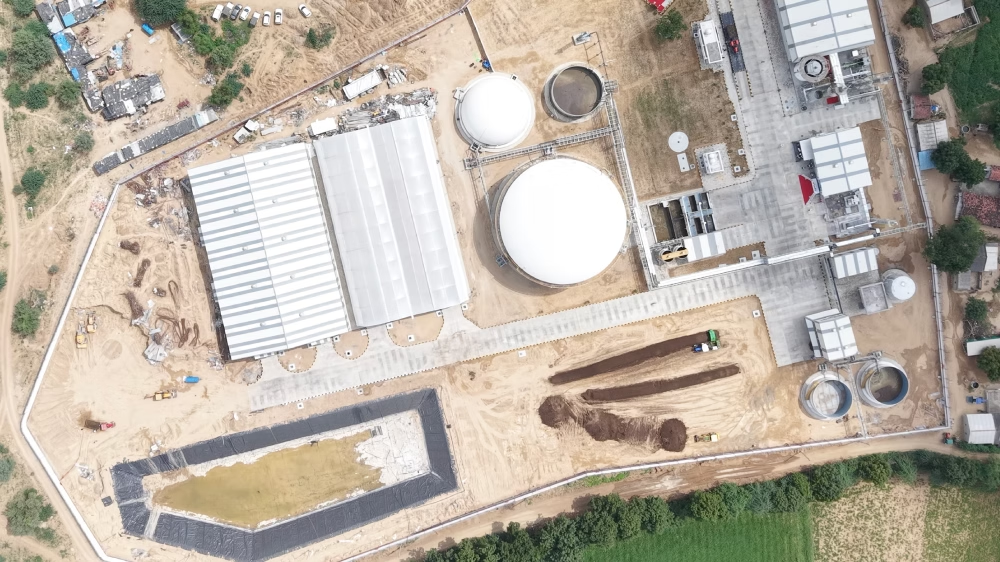
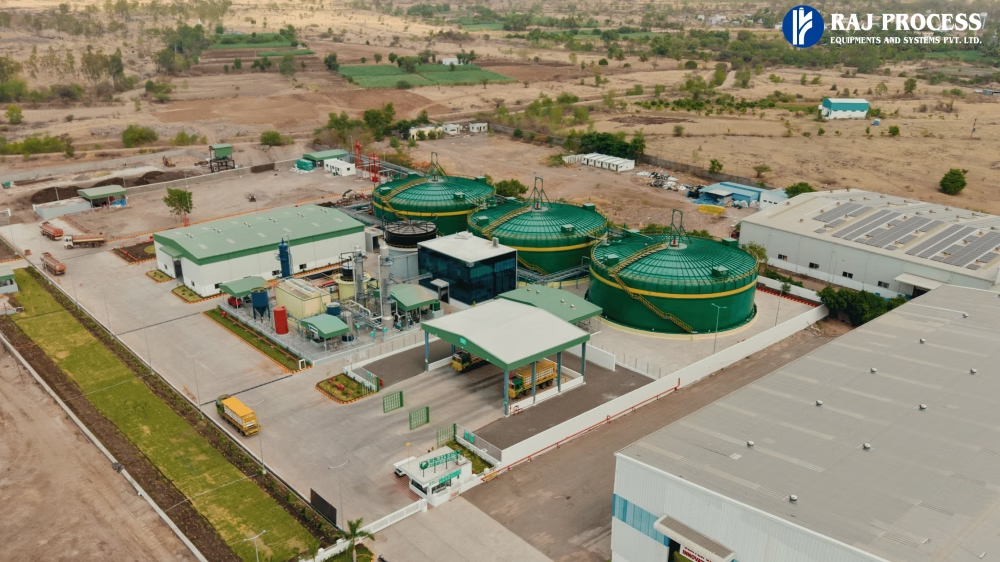
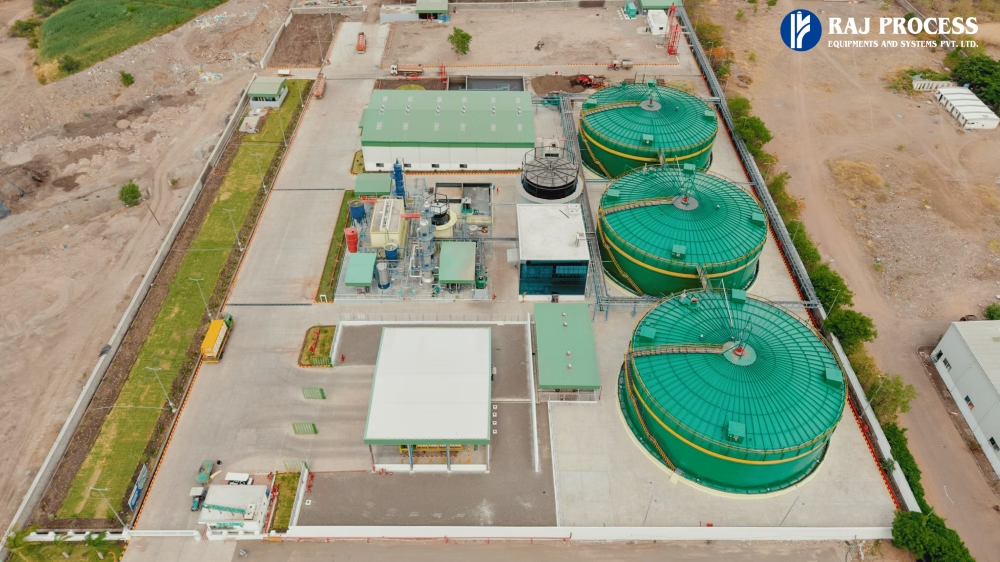
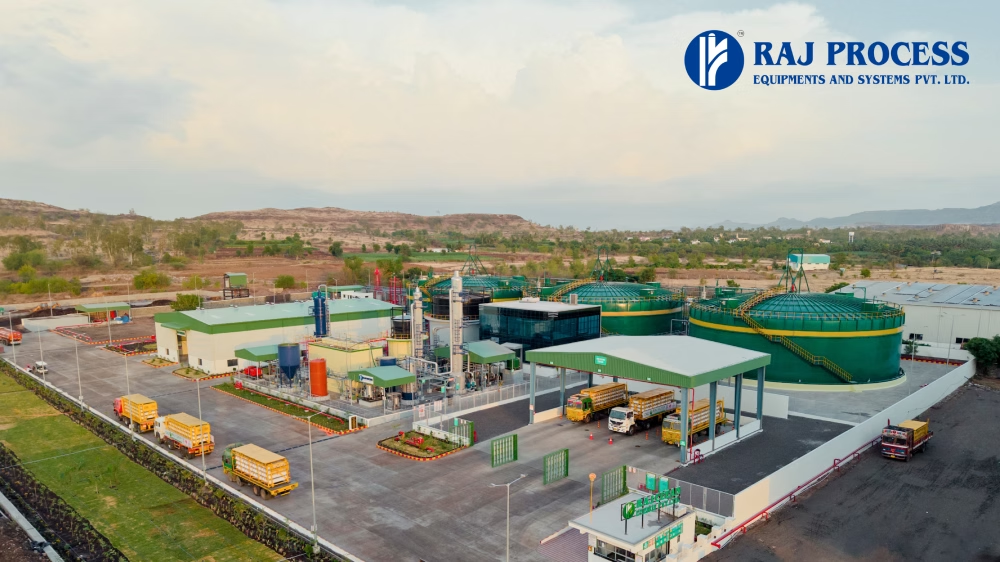
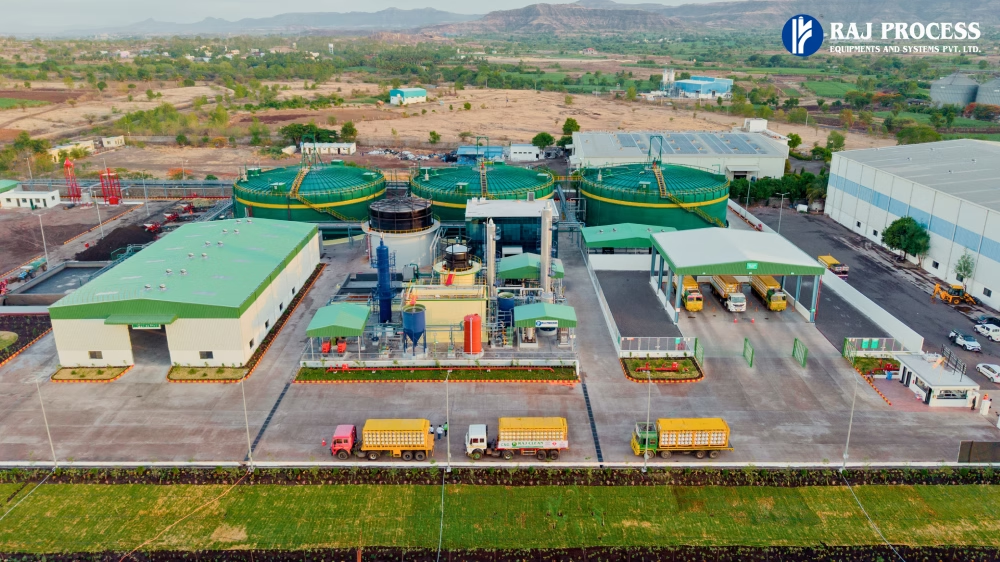
Raj Process Equipments & Systems Pvt. Ltd. is a Pune-based turnkey compressed biogas (CBG) plant manufacturer, delivering patented biodigestion and gas-purification technology alongside end-to-end project support — from land survey and government approvals through financing, construction, and long-term operation. We design and build systems that convert agricultural residue, press mud, distillery spent wash, municipal solid waste, and cattle dung into high-purity CBG, a direct, drop-in substitute for CNG.
Policy update (August 2026): The Union Cabinet has approved GOBARdhan — the National Circular Bioenergy Scheme — with an outlay of ₹23,731 crore, to run FY2026–27 to FY2035–36 under the Ministry of Petroleum and Natural Gas. It consolidates SATAT, the Market Development Assistance (MDA) scheme for FOM, the Biomass Aggregation Machinery (BAM) scheme, the Development of Pipeline Infrastructure (DPI) scheme, and Central Financial Assistance (CFA) into one integrated framework, targeting roughly ten-fold growth in domestic CBG production. For entrepreneurs evaluating a CBG project right now, this materially changes financing and offtake economics — Raj Process's regulatory and financial-syndication team tracks this scheme so you don't have to.
What Is a CSTR-Based Biodigester?
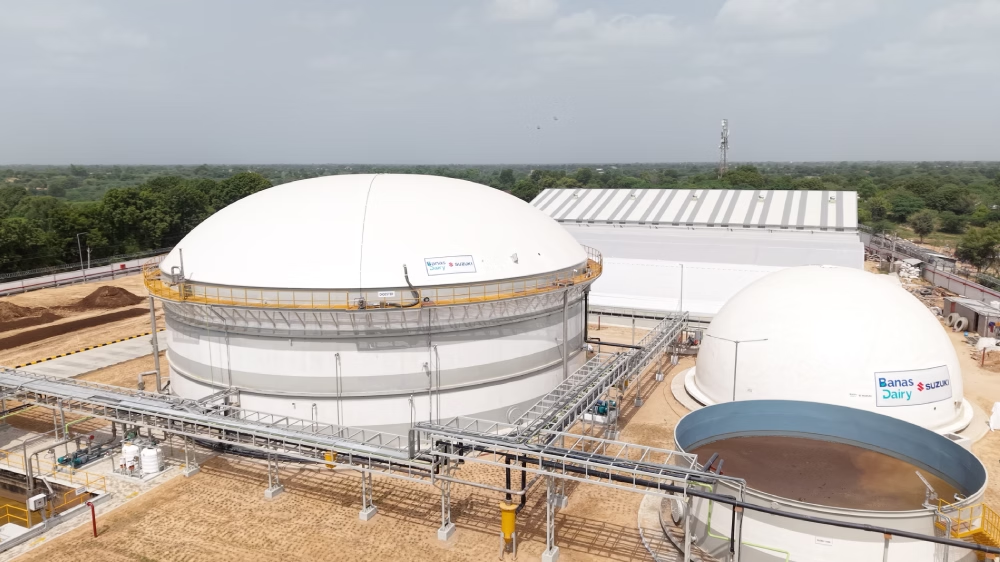
A Continuous Stirred Tank Reactor (CSTR) biodigester is an anaerobic digestion system that breaks down organic waste — agricultural residue, food waste, or sewage sludge — in the absence of oxygen to produce raw biogas and nutrient-rich digestate. Raj Process's patented CSTR design combines central and lateral agitation, which improves mixing uniformity and biogas yield compared with single-point agitation designs common in the market.
Turnkey Compressed Biogas Plant Solutions
We deliver CBG projects end-to-end:
- Plant Design & Engineering — optimised for efficiency, safety, and sustainability
- Equipment Manufacturing — fabricated across our five manufacturing units (Bhosari, Chakan, SEZ Nimgaon, Wasuli, Satara)
- Biogas Upgradation Systems — engineered to exceed 98% methane purity, above the ~95% methane threshold introduced in BIS's October 2025 revision of the CBG standard (IS 16087:2025), which superseded the prior 90% minimum under IS 16087:2016
- Automation & Process Control — PLC/SCADA-based integrated monitoring
- Installation, Commissioning & Training — full operational handover and support
How Raj Process CBG Plants Work
- CSTR configuration under mesophilic conditions for stable digestion
- Processes press mud, distillery spent wash, cattle dung, paddy straw, agri-residue, and other organics into raw biogas
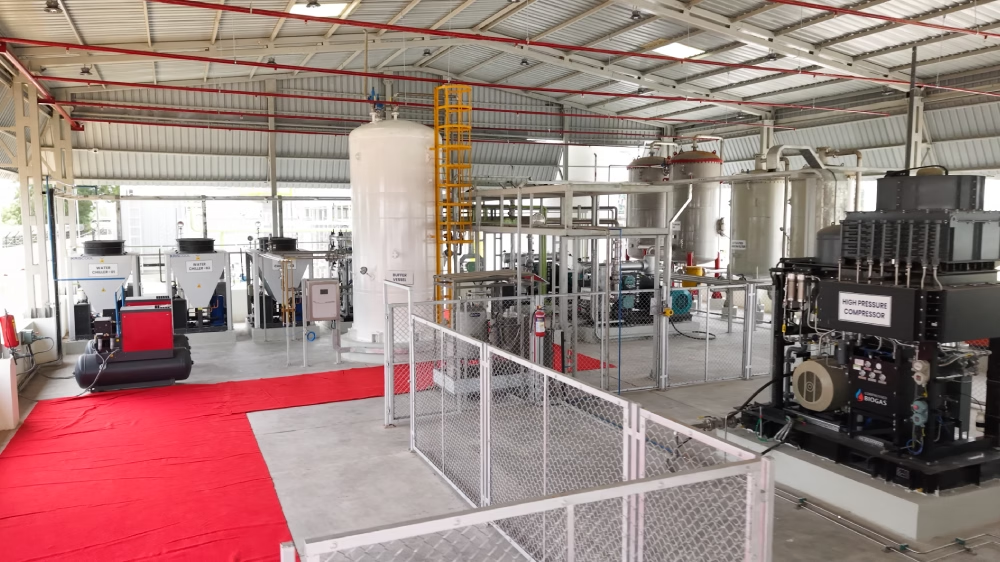
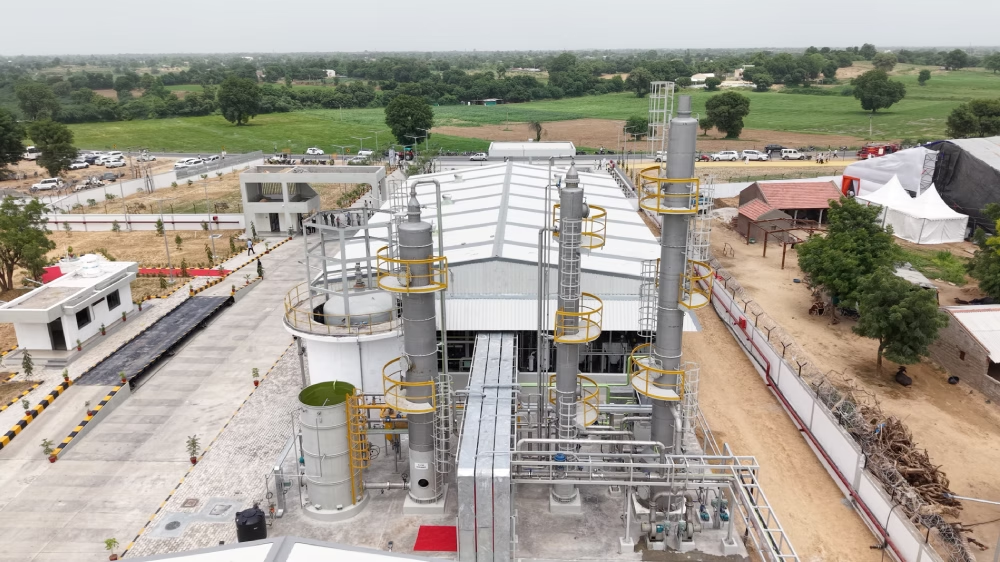
- Absorber columns remove H₂S and CO₂
- Exceeds 98% methane content, aligned with the current MoPNG/BIS CBG quality standard (IS 16087:2025)
- Real-time gas analysers and central gas holders maintain consistent pressure
- Available purification routes: biochemical + chilled-water scrubbing, Pressure Swing Adsorption (PSA), Vacuum Pressure Swing Adsorption (VPSA), and membrane separation — selected per project economics and feedstock
- Compressed to 250 bar using energy-efficient compressors
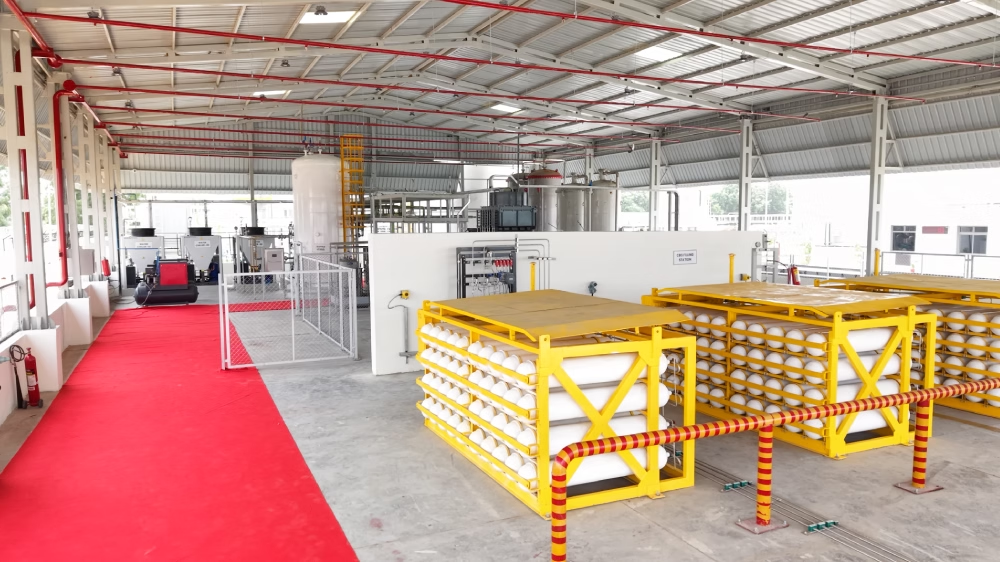
- Stored and transported as CBG for automotive, industrial, and CGD-network use
End-to-End Project Support: Registration to Carbon Credits
Most CBG plant delays don't happen in the digester — they happen in approvals, financing, and feedstock supply. Raj Process runs a dedicated advisory and liaison function alongside the EPC contract, covering every regulatory and commercial step of a CBG project:
1. Corporate & Industrial Registrations
- GST Registration
- Udyam Registration (MSME)
- Corporate documentation support
- Professional Tax Registration
2. Survey & Site Location Finalisation
- Land availability assessment
- Road access evaluation
- Water availability assessment
- Feedstock availability survey and assessment
- Multi-feedstock supply chain management assistance
- Power availability assessment
- Distance-from-CGD-offtake-point analysis
3. Energy Crop Supply & Service
- Elite Napier seed / planting material sourcing support
- Crop cultivation and harvesting support
- Feedstock quality monitoring
- Silage and harvesting management
4. Utilities & Infrastructure Approvals Assistance
- Groundwater NOC / permission support
- Water connection approval
- Electricity load sanction and approval
- Transformer and electrical infrastructure approval support
- Utility compliance documentation
- LOI for CGD & Tripartite Agreement assistance
5. Environmental & Pollution Control Approvals Assistance
- Consent to Establish (CTE)
- Consent to Operate (CTO)
- Environmental Clearance (EC) support
- Hazardous Waste Authorization
- Solid Waste Management compliance
- Environmental documentation & liaison
6. CBG / Bio-CNG Regulatory Approvals Assistance
- PESO approval coordination
- Fire Department NOC
- Electrical Inspector approval
- Weights & Measures approval
7. Financial Syndication & Project Financing Assistance
- Preparation of a bankable Detailed Project Report (DPR)
- Support for financial due diligence and appraisal
- Structuring and coordination of secure Tripartite Agreements (TPA)
8. FOM & LFOM Manufacturing Compliance
- Fertilizer Control Order (FCO) registration
- Agriculture Department licensing
- Product testing coordination
- Packaging & label compliance
- Raj Process purchases Granulated FOM from your plant
- Assistance with FOM / LFOM product marketing & sales
9. Government Scheme & Incentive Assistance
- SATAT scheme registration
- GOBARdhan portal registration (see verification note above)
- MNRE incentive & subsidy assistance
- Government liaison & compliance support
- MoA / Ministry of Agriculture & Farmers Welfare scheme support
- Central Financial Assistance (CFA)
- Biomass Aggregation Machinery (BAM) scheme
10. Performance O&M
- Long-term operation and maintenance of the CBG plant
- Daily monitoring of biogas and CBG production
- Methane purity and gas-quality monitoring
- Breakdown maintenance and troubleshooting support
- Supply and deployment of trained manpower
11. Solar Power Optimisation
- Assessment of plant electrical load and solar power potential
- Solar generation and plant-load optimisation
- Energy monitoring and performance assessment
12. Carbon Monetisation
- Registration of plant assets on global carbon registries for secondary revenue
- Assistance marketing and selling carbon credits to buyers
Feedstock-to-CBG Conversion Reference
| Feedstock | Feedstock Required per kg CBG |
|---|---|
| Agricultural residue | 20–25 kg |
| Press mud | 25–30 kg |
| Sewage sludge | 20–30 kg |
| Cane trash | 20–25 kg |
| Municipal solid waste | 25–35 kg |
| Cow dung | 50–70 kg |
| Chicken litter | 25–35 kg |
| Forest residue | 20–25 kg |
| Napier grass | 18–20 kg |
| Paddy straw | 14–20 kg |
Actual yield depends on feedstock quality, moisture content, and digester retention time. Raj Process's DPR process models this per-project rather than off a generic ratio.
Applications of Compressed Biogas
Automotive fuel
Direct substitute for CNG and LPG
Industrial heating and power
A green alternative to fossil fuel
Electricity generation
Via gas engines and turbines
Thermal energy
Steam and hot water systems in process industries
| Why Set Up a CBG Plant Now | Why Raj Process Leads as a CBG Plant Manufacturer in India |
|---|---|
| Environmental — cuts greenhouse gas emissions and diverts organic waste from landfills | Turnkey project expertise — from design through commissioning, plus the 12-category regulatory/financial support above |
| Energy security — reduces dependence on imported fossil gas (India currently imports roughly half its natural gas demand) | Advanced biogas upgradation — engineered for 98%+ methane recovery |
| Revenue for farmers & industry — converts press mud, agri-residue, and waste into CBG and Fermented Organic Manure (FOM) revenue streams | Five manufacturing units — Bhosari, Chakan, SEZ Nimgaon, Wasuli, and Satara, Maharashtra |
| Stronger policy backing than ever — the August 2026 GOBARdhan scheme brings assured offtake, capital assistance, credit support, and pipeline connectivity under one framework, on top of the existing SATAT offtake mechanism | Global project execution — installations across India, Brazil, Africa, and Southeast Asia |
| Future-ready — integrates with ethanol plants, distilleries, and biomass complexes | Sustainability-driven design — including Zero Liquid Discharge (ZLD) integration |
| Engineering roots since 1999 — grown from Raj Industries into a full-scale process engineering house |
Frequently Asked Questions
A CBG plant converts organic waste — agricultural residue, press mud, cattle dung, or municipal solid waste — into biogas through anaerobic digestion, then purifies and compresses it to 250 bar. The result is chemically similar to CNG and can be used as automotive fuel, industrial fuel, or blended into the city gas network.
SATAT (Sustainable Alternative Towards Affordable Transportation) is a Ministry of Petroleum and Natural Gas scheme launched on 1 October 2018 under which Oil Marketing Companies invite entrepreneurs to set up CBG plants and enter long-term offtake agreements at a notified procurement price.
GOBARdhan — officially the National Circular Bioenergy Scheme — was approved by the Union Cabinet in August 2026 with a ₹23,731 crore outlay, running FY2026–27 to FY2035–36 under the Ministry of Petroleum and Natural Gas. It consolidates SATAT, the MDA scheme for organic manure, the BAM scheme, the DPI pipeline scheme, and CFA into a single framework aimed at roughly ten-fold growth in domestic CBG production.
Typical approvals include GST and Udyam registration, Consent to Establish and Consent to Operate from the state pollution control board, PESO approval, Fire Department NOC, Electrical Inspector approval, groundwater and electricity connection approvals, and FCO registration if you intend to sell FOM/LFOM as fertiliser. Raj Process's regulatory liaison team manages this process.
Cost depends heavily on capacity, feedstock type, and purification technology chosen (water scrubbing, PSA, VPSA, or membrane), so a generic figure would be misleading. Raj Process prepares a bankable Detailed Project Report (DPR) with project-specific costing as part of its financial syndication support.
Raj Process's upgradation systems are engineered to exceed 98% methane purity, above the ~95% methane threshold set by BIS's October 2025 revision of the CBG standard (IS 16087:2025), which replaced the prior 90% minimum under IS 16087:2016.
Related Solutions




Send an enquiry via www.rajprocess.com/contact, call 020-69018100, or email sales@rajprocess.com.